Visualization matters
Buyer agents in NAR’s 2025 staging report said staging made it easier for buyers to visualize the property as a future home.
NAR staging research ↗
NYC smart-home planning before a sale
Renovating a New York City apartment, townhouse, or home before listing? This is the moment to decide what belongs behind the finished surfaces—and which buyer-facing experiences are worth completing now.
The honest investment case
There is no credible universal evidence that spending $50,000 on home automation adds $100,000 to a sale price.
What the evidence does support is more useful: staging can help buyers picture themselves in a home, practical technology features matter to many buyers, and a renovation gives you a cleaner window to plan infrastructure before the finishes return.
The pitch: make the property easier to understand, easier to demonstrate, and easier to inherit—then test the investment against local comparable sales with the listing team.
What the research actually says
These figures explain the opportunity without pretending home staging and home automation are the same investment.
Buyer agents in NAR’s 2025 staging report said staging made it easier for buyers to visualize the property as a future home.
NAR staging research ↗Twenty-nine percent of sellers’ agents reported this offer increase for staged homes. That is staging evidence—not proof of automation ROI.
Read the NAR report ↗NAHB buyer research highlights thermostats, cameras, video doorbells, security, multi-zone HVAC, and lighting controls among valued technology features.
NAHB buyer preferences ↗Correlation is not installation ROI. Zillow’s feature research explicitly cautions that a listing premium does not prove that installing a feature solely for resale will return its cost.
See Zillow’s methodology noteUse the renovation window
Finish only what improves the property today. Preserve options for what a future owner may choose later.
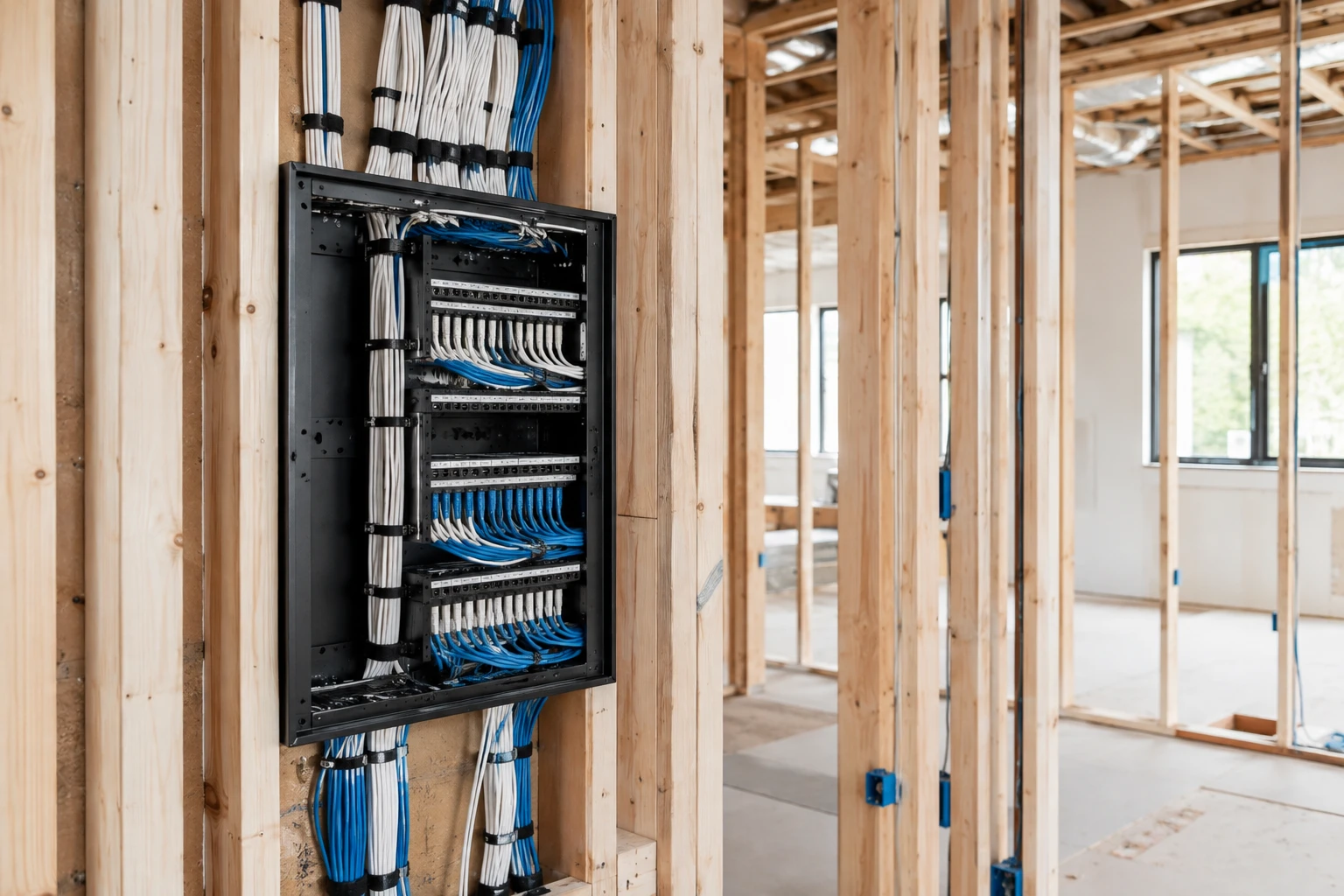
Plan cable routes, network locations, speaker wire, shade power, camera positions, and equipment space before surfaces are closed.
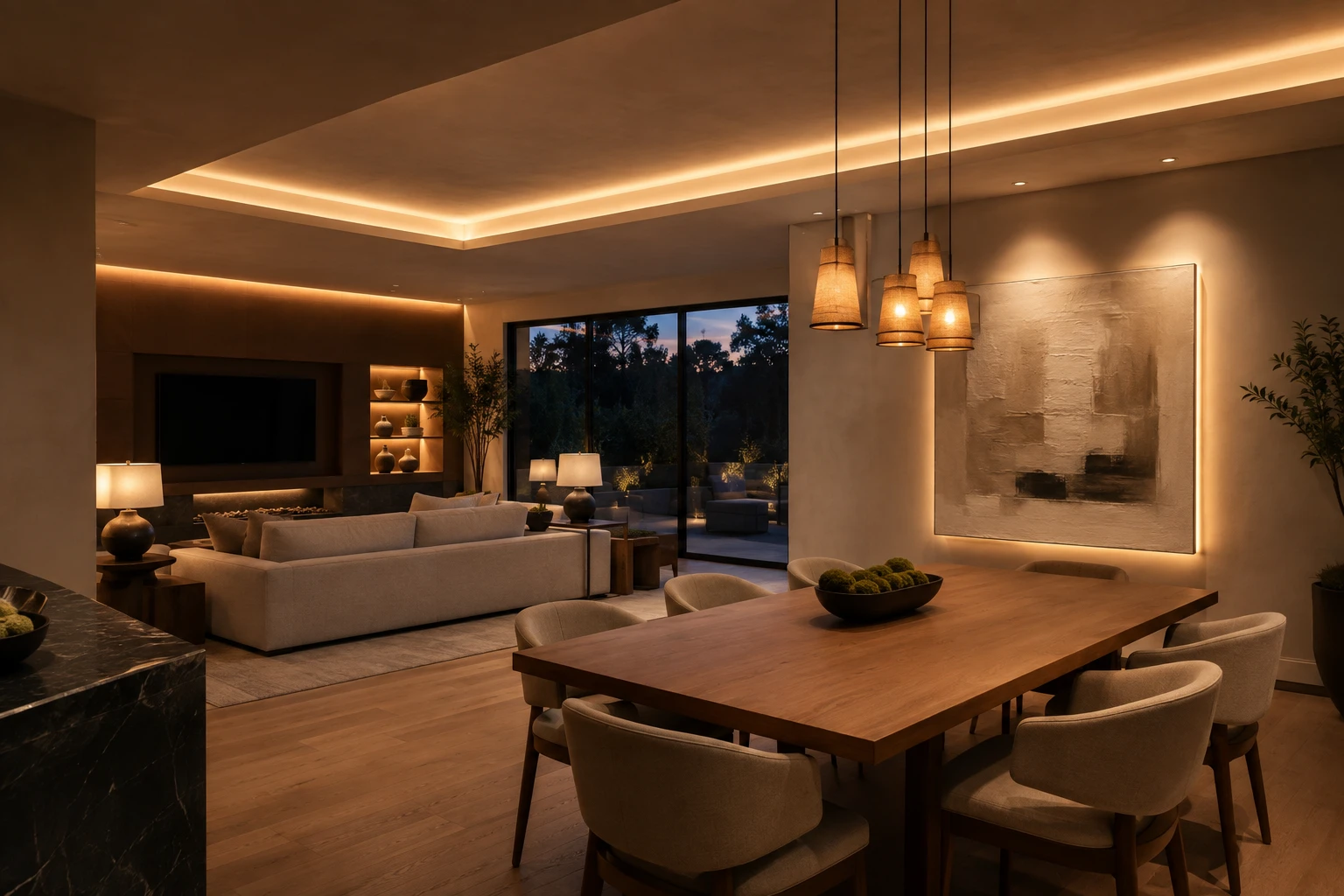
Align keypads, fixtures, shades, displays, speakers, and access hardware with the lighting plan, millwork, and finished architecture.
Favor a few clear scenes and controls over a complicated demo. The finished experience should make sense in seconds.
Document what stays, what needs an account, how the system resets, and who can support it after closing.

Built for the realities of NYC
Coordinate the technology scope with the building’s renovation process, contractor schedule, available pathways, and handoff requirements.
Decide where wired infrastructure matters most and where a lower-impact approach better protects finished plaster, millwork, and character.
Plan the network, access, security, audio, and control across floors as one property rather than a stack of isolated rooms.
Prioritize dependable connectivity, privacy and glare control, clear entry communication, and discreet integration with the interior design.
A better way to judge the spend
Compare the incremental cost during renovation with the disruption of adding the same pathway later.
Prioritize visible, repeatable benefits over hidden complexity or a long list of devices.
Ask the listing agent or appraiser which features buyers expect at this property’s price point and neighborhood.
A documented, supportable system is a stronger asset than personal accounts and automations a buyer cannot inherit.
Before you invest
The right scope is the one the property, renovation, and likely buyer can support.
No universal increase can be promised. Property value depends on the home, neighborhood, buyer, market, installation quality, and comparable sales. The practical case is strongest when useful systems fit the renovation and are simple for a buyer to understand and inherit.
Renovation creates access to routes for cable, power, blocking, controls, shades, speakers, cameras, and network equipment. Planning before finishes return can reduce avoidable disruption and keep technology aligned with the architecture.
Start with practical outcomes: reliable Wi-Fi, useful lighting scenes, straightforward climate controls, video entry or security, concealed audio, and shades that improve privacy or glare. Priorities should match the property and likely buyer.
Decide early which installed devices, hubs, keypads, accounts, and subscriptions stay. A clean handoff should include an equipment list, reset or transfer steps, essential instructions, and a simple demonstration.
For transfer planning, see the National Association of REALTORS® guide to selling a home with smart technology. This page provides general planning information, not an appraisal or guaranteed return.
Start with the space
You don’t need a finished equipment list. A few details are enough to start a useful conversation.